Snacks are very popular in Japan. They differ from American snacks in that there are smaller portion sizes and healthy snacks are available along with unhealthy snacks, not in special "health food" areas like the US has. Although smaller portions and healthy options are good, Japan has the highest anorexia rate of any country.
Although portion sizes are smaller, unhealthy snacks are popular. Japanese people often eat for texture as well as flavor, so there are a lot of fried, puffed, crunchy foods like soy and miso flavored rice crackers and corn flavored crisps (these are a little sweet. Healthier crisp options include baked puffs in a variety of flavors including a lot of fish- inspired tastes. Fish is a common snack in Japan because they are an island, and crisp, whole, tiny died fish are popular! Small bags of fish and almonds are a common snack. Very chewy, and healthy, dried squid tentacles fish pieces can be found in convenience stores (these are much like jerky).
Sweet food are a really popular choice for a snack in Japan. One that's found here too is Pocky--bland, crisp, thin bread sticks dipped in chocolate, strawberry, or other flavor coatings. In Japan, green tea and red bean flavors are common! Other cookies like HELLO panda, with creamy, sweet fillings are popular. There are countless other cookies with light, crunchy texture. It's interesting to note that the cookies are always small so you can eat one or two and enjoy the texture and flavor without too many calories. Hard candies in fruit flavors are enjoyed by many people and are often available in tins with popular Japanese cartoon (anime) characters. Since texture is important, you can also find a variety of interesting chewy candies. HiChew is a fruit-flavored chewy candy that's available in the US also. It melts in your mouth slightly as you chew and is a little bouncy, making it a fun experience to eat.
Saturday, February 20, 2016

Wednesday, February 17, 2016
Rock Gardens
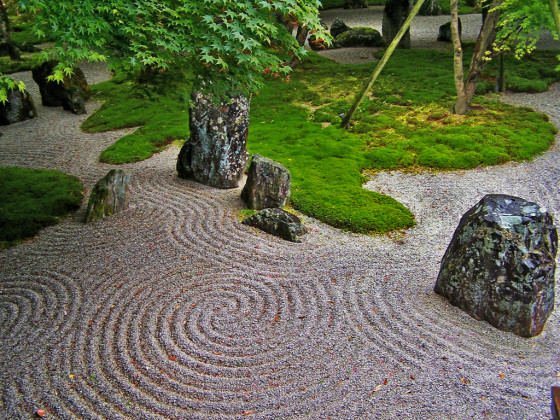
Japanese rock gardens, called karesansui (枯山水) are a type of traditional Japanese art. Similar to Ikebana, Japanese people tend to their zen rock gardens to stay calm and create a peaceful atmosphere. A tranquil mindset is that of a very happy and well-adjusted person. The kanji for karesansui literally means “dry landscape.” Japanese rock gardens have been studied and tended to for hundreds of years. Originating from early Chinese settlements, it’s one of the oldest Japanese traditions still practiced today. The main point of rock gardens is tending to them. The sense of peacefulness comes from repeatedly smoothing and raking the sand, slowly travelling around your garden over and over to create a flawless finish.
Japanese traditions are very important to Japanese people, and rock gardens are the same. Rock gardens are often created with lots of sand or small stones as a base. This sand is raked and smoothed into various patterns depending on the style of the rock garden (pictured below). Rock gardens, as their names suggest, also carry many rocks. These can be large, weathered boulders or small rounded pebbles. Some rock gardens use large, flat rocks as stepping stones to get through the garden without disrupting the sand.
Many contemporary rock gardens also contain foliage such as trees, bushes or moss. Moss naturally occurs on some rocks, and it adds color to the grays and browns of the rocks and sand. The trees oxygenate the air and allow people visiting the gardens to feel more at ease and peaceful. The different height of the trees and bushes also allow for some artistic contrast. This contrast allows the gardens to be more aesthetically pleasing and add a greater sense of peace to the garden overall. Rock gardens are very interesting in that they are only popular in Japan and around some Buddhist temples in China.

Saturday, February 13, 2016
Valentine's Day
Do you have any plans for Valentine's Day? Is there a special way of spending this time in your culture? In Japan, it is only the women who give presents (mainly chocolates) to men. Japanese women are usually too shy to express their love. (Though it might not be true nowadays.) Therefore, Valentine's Day was thought to be a great opportunity to let women express their feelings. However, this is a custom that smart chocolate companies spread to boost their sales, and it has been very successful.
Now the chocolate companies in Japan sell more than half of their annual sales during the week before Valentine's Day. Men are supposed to return gifts to women on a day called White Day (March 14th), a Japanese creation
There is a strong tradition of women giving chocolates to men on Valentines Day. There are two types of chocolates, “Giri-choco” (obligation chocolate), and “Honmei-choco”. Giri-choco is meant to be for friends, colleagues, bosses, and close male friends. “Giri” means obligation hence this Giri-choco has no romance involved. On the other hand, Honmei-choco is given to a boyfriend, lover, or husband with true love. Japanese women often prepare the Honmei-choco by themselves as many of them think it is not true love if they just buy the ready made chocolate at shops. You will start seeing large displays of chocolate, often heart-shaped in department stores and grocery stores from mid-January. Days before the Valentine’s Day, stores get packed with a large variety of chocolates, the cooking tools, and women!
Does it sound good to you? Don't get too excited when you get chocolates from Japanese girls! They might be "Giri-choko (obligation chocolate)." Women give chocolates not only to their loved ones ("A true love" chocolate is called "Honmei-choko.") "Giri-choko" is the chocolate given to men such as bosses, colleagues or male friends that women have no romantic interest in, just for friendship or gratitude.
Now the chocolate companies in Japan sell more than half of their annual sales during the week before Valentine's Day. Men are supposed to return gifts to women on a day called White Day (March 14th), a Japanese creation
There is a strong tradition of women giving chocolates to men on Valentines Day. There are two types of chocolates, “Giri-choco” (obligation chocolate), and “Honmei-choco”. Giri-choco is meant to be for friends, colleagues, bosses, and close male friends. “Giri” means obligation hence this Giri-choco has no romance involved. On the other hand, Honmei-choco is given to a boyfriend, lover, or husband with true love. Japanese women often prepare the Honmei-choco by themselves as many of them think it is not true love if they just buy the ready made chocolate at shops. You will start seeing large displays of chocolate, often heart-shaped in department stores and grocery stores from mid-January. Days before the Valentine’s Day, stores get packed with a large variety of chocolates, the cooking tools, and women!
Does it sound good to you? Don't get too excited when you get chocolates from Japanese girls! They might be "Giri-choko (obligation chocolate)." Women give chocolates not only to their loved ones ("A true love" chocolate is called "Honmei-choko.") "Giri-choko" is the chocolate given to men such as bosses, colleagues or male friends that women have no romantic interest in, just for friendship or gratitude.
Deco Choco
So take your chocolate that’s already tempered and that’s just cooled down, and put a little bit of it right onto your acetate sheet, your transfer sheet, and just take a small offset spatula and just spread it. You’re looking for a very thin layer, not too thin that it will break, but just thin enough. Imagine like a piece of thin brittle like a candy. Just spread it all over.
Now, for the other you should make a little bit of like a chocolate squiggly design. So, take a little bit of your chocolate right into the corner and you can see it just goes right to the bottom. You should take it and fold it over, and then you’ll have a really cute little cone.
This is also great if you want to write people’s names on birthday cakes. You just write happy birthday with the little chocolate cone. Just snip the tip and you can go as wide or as kind of small as you want to.
All you should do is just make cute little kind of squiggly designs. When they’re set you should break these up and put them in shards kind of on top of your cake. It’s going to be really beautiful lace to put around. So easy, incredibly easy, but it looks really cool.
So that’s it for that. You want to do enough that it’s not going to break on you, so a good layer of squiggle, a very technical term. That is it. So, all of these chocolate designs you should pop in the fridge or the freezer until they’re nice and firm and set. Then take them off of these transfer sheets and put them on some cakes, and you’ll see some really beautiful designs.

Thursday, February 11, 2016
Aegyo Sal
In America, it's very important to hide under eye bags. There are many different types of concealers and foundations sold to specifically cover up darkness that can appear under eyes. Dark eye bags can be formed by many different reasons, such as lack of sleep, being sick or having an illness, or even having excess makeup under your eyes that has rubbed off without you knowing. Each of these things are very important to be aware of to avoid dark under eye bags.
Many women use many methods to get rid of them. There are countless tutorials on the internet and YouTube videos that illustrate in detail how exactly to get rid of this pesky discoloration. You can put cucumbers on your eyes (with a rejuvenating facial mask of course) or put ice under your eyes to rid yourself of this problem. Or, you could not do anything at all.
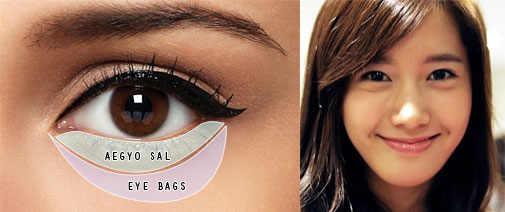
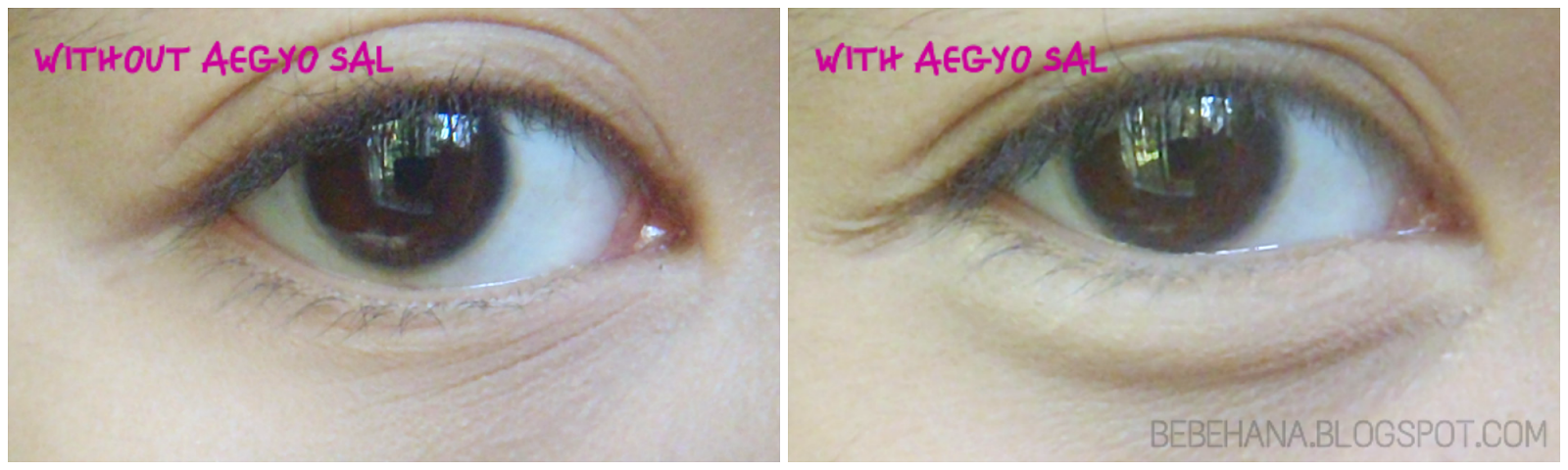
A recent trend in Japan has been to actually accentuate a certain part of your under eyes. It originated in Korea, because very famous models and idols known for their youth were idolized for their "under eye pudge." This "pudge" (when accentuated) makes a woman look more youthful and beautiful. Similar to the tsuke yeba trend, a younger looking woman will be more approachable. The aegyo sal is usually only seen prominently when you are smiling. If you make it more prominent, it will seem like that woman is always smiling.
The aegyo sal look doesn't always work out for everyone. The reason aegyo sal is very popular in Japan and Korea is that it makes women with hooded eyes more youthful, and the most common eye shape in all of Japan and Korea is hooded eyes. Most Japanese and Koreans also have hooded eyes. It works on American hooded eyes as well, no matter the ethnicity of the people trying it. However, the effect varies on different eye shapes. For example, it doesn't turn out very well on protruding eyes (pictured below). It's almost scary. On down turned and almond-shaped eyes (and most double-lidded eye shapes, depending on the shape of the person's face as well) it can make the wearer of aegyo sal look weird.
 [source]
Aegyo sal is also a surgical procedure.If you do not have naturally-occurring aegyo sal (i.e. most people over 20), you can have these created artificially. The only permanent way to achieve them is via a surgical procedure where a 0.5 cm flat strip of AlloDerm (acellular dermal matrix) or Gortex is inserted under the skin surface through two small incisions, leaving behind tiny scars. This method heals quickly and sutures can be removed after 3-4 days.
Aegyo sal can also be achieved with fillers for those who do not want to go under the knife. This method is temporary and lasts around 6 months. If you’re curious as to whether your favorite idol has taken the surgical or non-surgical route, keep an eye on their aegyo sal and see if it is sometimes more or less pronounced. If the size of their under-eye bands fluctuates, it’s likely they’ve gone for the filler option.
Lastly, there are make up tricks to help you get the youthlites look without even needing to see a doctor. If you’re interested in this option, Google is your friend.
Etude House suggests starting off with the light brown to contour right beneath the eye pudge. Then, smile hard with your eyes to bring out the pudge to see where you should contour. The next step is to use the champagne pink to line the inner corners of your eyes and right underneath your under lashes up until where you contoured in the first step. Finally, using a mirror (and plenty of sunlight) use a blending brush (or your finger) to make sure the brown blends in naturally with the champagne pink. (After a couple of tries, I found that it didn't matter which step you started with first, since you blend it out anyway.)
Many women use many methods to get rid of them. There are countless tutorials on the internet and YouTube videos that illustrate in detail how exactly to get rid of this pesky discoloration. You can put cucumbers on your eyes (with a rejuvenating facial mask of course) or put ice under your eyes to rid yourself of this problem. Or, you could not do anything at all.
A recent trend in Japan has been to actually accentuate a certain part of your under eyes. It originated in Korea, because very famous models and idols known for their youth were idolized for their "under eye pudge." This "pudge" (when accentuated) makes a woman look more youthful and beautiful. Similar to the tsuke yeba trend, a younger looking woman will be more approachable. The aegyo sal is usually only seen prominently when you are smiling. If you make it more prominent, it will seem like that woman is always smiling.
The aegyo sal look doesn't always work out for everyone. The reason aegyo sal is very popular in Japan and Korea is that it makes women with hooded eyes more youthful, and the most common eye shape in all of Japan and Korea is hooded eyes. Most Japanese and Koreans also have hooded eyes. It works on American hooded eyes as well, no matter the ethnicity of the people trying it. However, the effect varies on different eye shapes. For example, it doesn't turn out very well on protruding eyes (pictured below). It's almost scary. On down turned and almond-shaped eyes (and most double-lidded eye shapes, depending on the shape of the person's face as well) it can make the wearer of aegyo sal look weird.
Aegyo sal is also a surgical procedure.If you do not have naturally-occurring aegyo sal (i.e. most people over 20), you can have these created artificially. The only permanent way to achieve them is via a surgical procedure where a 0.5 cm flat strip of AlloDerm (acellular dermal matrix) or Gortex is inserted under the skin surface through two small incisions, leaving behind tiny scars. This method heals quickly and sutures can be removed after 3-4 days.
Aegyo sal can also be achieved with fillers for those who do not want to go under the knife. This method is temporary and lasts around 6 months. If you’re curious as to whether your favorite idol has taken the surgical or non-surgical route, keep an eye on their aegyo sal and see if it is sometimes more or less pronounced. If the size of their under-eye bands fluctuates, it’s likely they’ve gone for the filler option.
Lastly, there are make up tricks to help you get the youthlites look without even needing to see a doctor. If you’re interested in this option, Google is your friend.
Etude House suggests starting off with the light brown to contour right beneath the eye pudge. Then, smile hard with your eyes to bring out the pudge to see where you should contour. The next step is to use the champagne pink to line the inner corners of your eyes and right underneath your under lashes up until where you contoured in the first step. Finally, using a mirror (and plenty of sunlight) use a blending brush (or your finger) to make sure the brown blends in naturally with the champagne pink. (After a couple of tries, I found that it didn't matter which step you started with first, since you blend it out anyway.)


Sunday, February 7, 2016
Hot and Humid
When I went to Japan, it was summer, so it was very hot and humid. I had been hiking though Japanese concrete jungles all day and it was the hottest time of the day. If I looked into the distance I could see shimmering heat illusions. My feet were aching, the arches of my feet not very supported by my walking shoes. My shirt was soaked with sweat where my backpack rested against my back. Each step felt like I was generating heat. Because it was in the city, the buildings didn't give much shade.
My paper fan gave me minimal relief from the heat, but the sticky humid air surrounded me. Everyone in my group seemed to have to muster up energy for each step. We were on a long road to the temple we were going to visit. In Japan, it's rude to sit on the ground, especially in a temple. That's considered incredibly disrespectful. But the problem with being used to America is, there aren't many seats in Japan. The people who live in Japan are used to walking, and they are generally skinnier in Japan than Americans (in fact, anorexia rates are very high in Japan, but that's due to very restrictive beauty standards, not the actual overall healthiness of Japanese citizens). Obesity rates in America are skyrocketing, and benches can be seen nearly every block in many highly populated areas. In Japan, however, seats are generally reserved for pregnant women, disabled persons, and the elderly. These seats can be taken by out-of-shape foreigners only if there aren't any other people around.
My paper fan gave me minimal relief from the heat, but the sticky humid air surrounded me. Everyone in my group seemed to have to muster up energy for each step. We were on a long road to the temple we were going to visit. In Japan, it's rude to sit on the ground, especially in a temple. That's considered incredibly disrespectful. But the problem with being used to America is, there aren't many seats in Japan. The people who live in Japan are used to walking, and they are generally skinnier in Japan than Americans (in fact, anorexia rates are very high in Japan, but that's due to very restrictive beauty standards, not the actual overall healthiness of Japanese citizens). Obesity rates in America are skyrocketing, and benches can be seen nearly every block in many highly populated areas. In Japan, however, seats are generally reserved for pregnant women, disabled persons, and the elderly. These seats can be taken by out-of-shape foreigners only if there aren't any other people around.
Saturday, February 6, 2016
Soft Serve
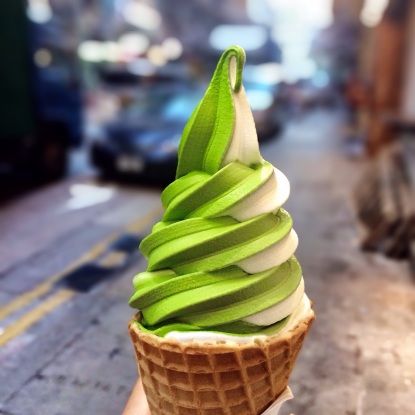
In Japan, summers are very hot and humid. Many people like refreshment and relief from the harsh summer sun. Where I live, which is a small-ish city in the Midwest, people get refreshments from ice cream parlors, drive through ice cream shops such as Dairy Queen, or they get icy drinks or shakes from places like McDonald's. In Japan, however, there is a slightly different type of refreshment. America has soft serve ice cream, and Japan does too. But in Japan, there are a plethora of different flavors. There are also ice cream stalls and stands that sell soft serve on the street. The ice cream is cheap and delicious. Green tea, or macha, is very popular in Japan. The green tea soft serve is one of the most popular flavors. There are also other flavors such as red bean (also known as azuki), mango (mango in japanese is just mango, but pronounced differently), peach (or momo), plum (or ume), and watermelon (or suika). All of these delicious flavors are very refreshing on a hot day. Ice cream is most popular in the summer, but it is also sold in the spring as well. Hot summer days are perfect for getting your favorite ice cream treat. Larger cities in America, such as New York or Washington D.C. have stands that sell ice cream, but usually it's scooped out of chilled, metal containers. Soft serve machines need constant energy to run, so they must be plugged in. They also use a lot of energy, because the machines must constantly spin the soft serve mix to keep it from freezing or melting to a consistency that wouldn't hold up in a swirl on a cone. Still, Japanese soft serve stands are very refreshing in the summer.

Subscribe to:
Posts (Atom)